If there was any doubt as to Star Trek‘s total awesomeness, we also have it to thank for tablet computing!
Marc De Santis

If there was any doubt as to Star Trek‘s total awesomeness, we also have it to thank for tablet computing!
Marc De Santis
Here are some photographs of Second Word War-era warbirds at the American Airpower Museum in Famingdale, New York.
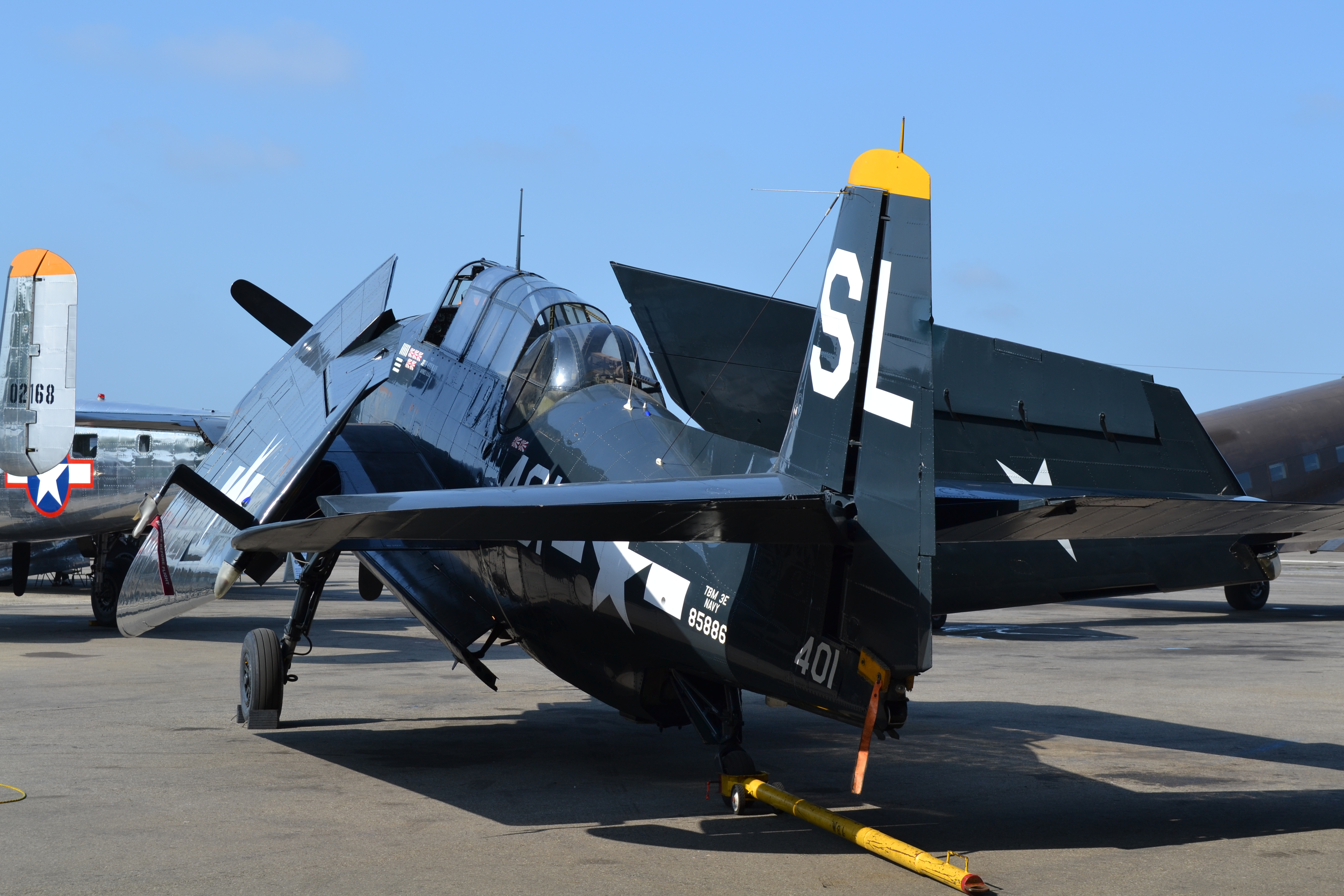
This is a Grumman TBF Avenger, a torpedo bomber used to great effect in the Pacific Theater. Its wings could fold to save space on an aircraft carrier.
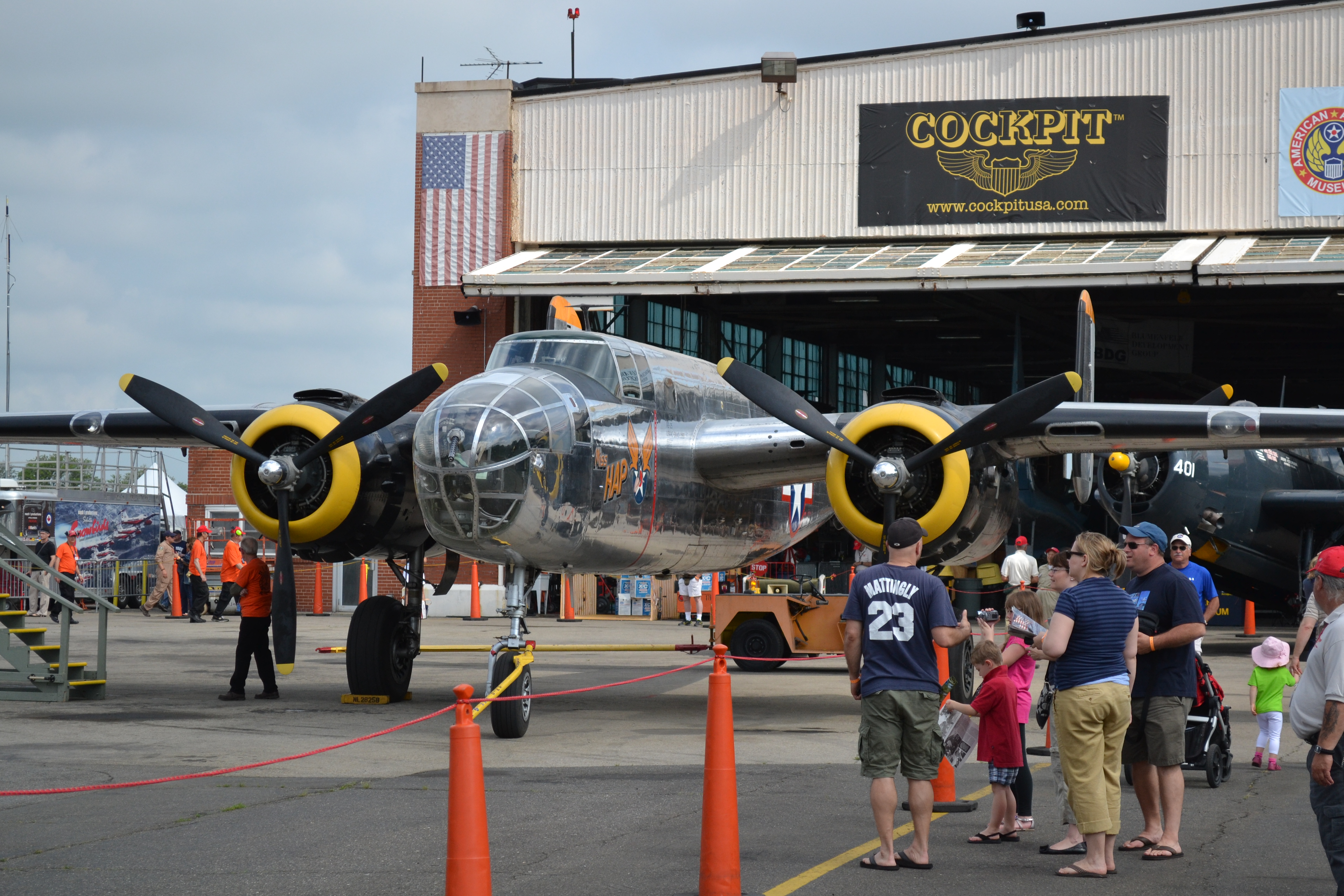
This is a North American B-25 Mitchell medium bomber. It was made famous for its role in the 1942 Doolittle Raid on Japan – Thirty Seconds over Tokyo. This particular machine was General Hap Arnold’s personal airplane.
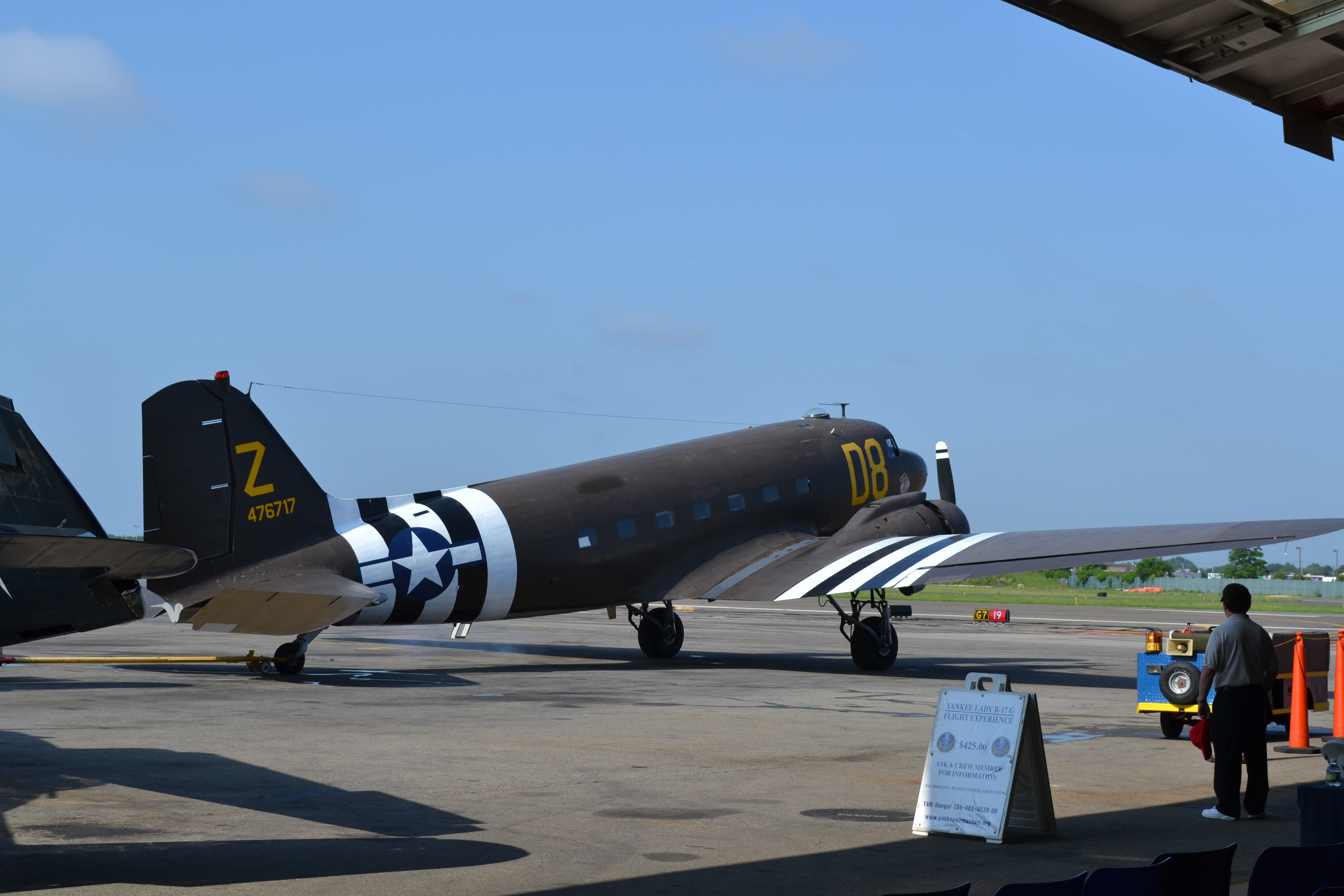
This is a Douglas C-47 Dakota. It is the military transport version of the legendary DC-3 airliner. It is painted with D-Day invasion stripes, and looks as it would have when it carried American paratroopers to jump into Normandy in June 1944.
All three photographs were taken with a Nikon D3100.
Marc De Santis
The Panasonic Lumix ZS19 is a fine digital camera of the point-and-shoot compact class. It is small, lightweight, and packed with features. It works well for me, but will it satisfy you? That depends on what you are looking for in a camera. A simple point-and-shoot will perform very well in most situations. My 6.0 megapixel Canon Powershot SD600, ancient now, takes fantastic photos and is solidly built. I wanted to step up to something better, while still retaining the size profile of a compact camera. It had to fit into a coat pocket, and so could not be much larger than a bar of soap. I also wanted a better zoom capability than my Canon’s 3x so that I could take acceptable pictures of subjects beyond ten feet in distance. Sometimes, when I snapped on a distant subject with the Powershot, it made everything in the photo look as if it was on the other side of the Atlantic. A DSLR would have given me great shots from a long distance, but it would have been much too large to fit into a jacket. So instead I would go with a so-called travel zoom, which is a compact camera with a telescoping lens that extends far out from the body.
My initial impressions of the ZS19 have been very favorable. Image quality on the 14.1 megapixel, 20x optical zoom ZS19 is generally fantastic, the 3.0 inch LCD is bright and sharp, and the controls are simple to use. The small Leica lens is superb. In portrait mode, bokeh is excellent. Onboard effects are plentiful, and most can be accessed via a small dial on the top of the device. I found that the zoom function was occasionally problematic. It was easy to overzoom on a subject because the control was a trifle jerky. The far older Canon’s zoom, by contrast, is silky smooth. Also, at extended ranges, a computerized “digital zoom” effect takes over on the Lumix, and the results can be either hit or miss. Panasonic promises 40x with the Intelligent Zoom function engaged, an impressive number, but don’t expect it to work out in every instance. 20x maximum is more realistic. Low light photos, as you could expect, are also spotty, sometimes okay, sometimes not. I also wish that the build quality was better. It isn’t that I expect the Lumix to break, it is not flimsy, but I just can’t help compare it to my rugged, all-metal Powershot. The ZS19 feels a bit plasticky.
At short distances, the image quality is very close what you would obtain from an entry-level DSLR, so if high quality close-up pictures, with an occasional distance photo, is what you are about, the ZS19 will be a great carry camera. If you need something more, such as if you are taking photos of the Grand Canyon, Paris in the springtime, the Sistine Chapel’s ceiling, or simply want the highest quality images, a DSLR will provide everything you need, but it will be a much larger machine. There is also an intermediate class of digicams known as compact system cameras, or CSCs, which do away with mirrors and produce images comparable to lower-end DSLRs, in a smaller-than-DSLR package. However, many of these devices, with all but the shortest lenses attached, are still significantly larger than a compact point-and-shoot, and cost about as much, or more, as an entry-level DSLR.
The ZS19 sells for $249.00 at Costco, so do not pay any more for it than that, period. You will also have to get a proper carry case for it. The kit case is barely adequate. Battery life is sufficient, and no more. No charging unit is supplied, so the battery will have to charged while in the camera itself. Below are a few photos that I took with the ZS19.
Check out some of the photos I took with it here in an earlier post.
Marc De Santis is the author of the fantasy novel BloodLikeWine. He blogs at ConsolidatedPopCulture about whatever he pleases.
Here are several photos I have of WWII warbirds at the American Airpower Museum in Farmingdale, New York. So let’s just imagine that we really did discover a trove of old photos that had been mislaid for nearly seven decades. And ignore the indications of 21st century attire or technology. It is 1944!

This P51 Mustang is waiting to take off on an escort mission over Germany, June 1944.
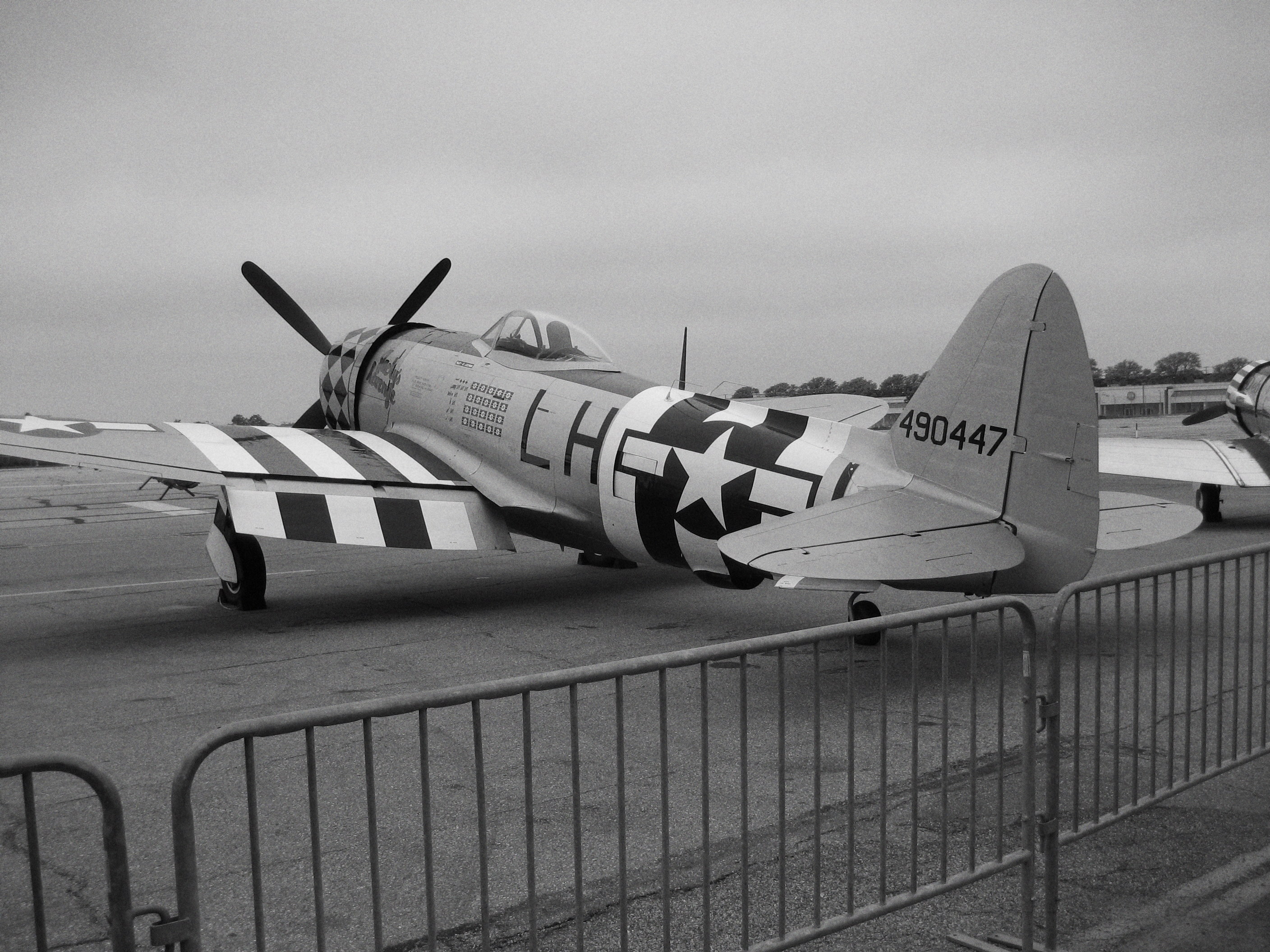
This p47 Thunderbolt has just returned from a strafing mission over occupied France, June 1944.

This Navy F4U Corsair waits to take off from the deck of the USS Essex, September 1944. Please ignore the concrete flight deck.

At this late date in the war, the P40 Warhawk is a second-line fighter, but still soldiers on providing close air support for ground troops. This machine is stationed in southwestern China, August 1944.
Marc De Santis
The U.S. Army’s soldiers will be getting new uniforms – eventually. The current Universal Camouflage Pattern (UCP), made of a digitally-composed color pattern, has not proven quite as universal as hoped. It is a fine uniform, ironically, for only a limited environment – the urban. Otherwise, it doesn’t quite cut it. It is too light for forest or jungle environments. It is not brown enough for Afghanistan, and not tan enough for the desert.
Providing soldiers with a proper uniform camouflage is much harder than one might think. Finding an acceptable pattern takes a lot of work, and experience in World War II and Vietnam has shown that different places require different patterns, A universal pattern was a good idea on paper, but not in practice. Soldiers now deploying to Afghanistan are already getting their new MultiCam duds. MultiCam looks to me a bit more like modern German camouflage.
The whole story has made me wonder what caused them to change in the first place. Three-color desert was fine for Iraq, but then the Army went to UCP. Simply enhancing this pattern with more brown would have been effective for Afghanistan. UCP was one of those things that must have sounded great, but did not work more effectively than specific solutions tailored for a particular theater.
I have been looking over even older patterns too, and I can’t help but think that the 1981 woodland pattern was great. Not without flaws, but good for an enormous range of environments. I also think that the so-called chocolate chip pattern uniform (Desert Storm) was effective.
In any event, this is being called a $5 billion mistake. Check out this article.
MGD
This photograph was found on the web recently. It is purportedly a secret stealth drone similar to the ones already acknowledged to be in the U.S. arsenal. What strikes me about this photo isn’t so much that we have a machine like this that doesn’t officially exist – it is that we can get a photo of this from space and have it available in full color everywhere. The Kennedy Administration had nothing remotely like this during the Cuban Missile Crisis back in 1962. Today, such images are so common that we barely notice the technology.
MGD
Professor James Holmes of the Naval War College is fast becoming one of my favorite web authors. I have blogged about one of his articles before, and this week he has produced another fine piece in Foreign Policy about U.S. strategy in the Pacific, Is America Pivoting Fast Enough to the Pacific? Now that the wars in Iraq and Afghanistan are winding down (hopefully), the Pentagon is moving to bolster American forces in the Pacific.
China will prove to be tough customer in any fight. The U.S. should be wary of sticking its nose too far into the South China Sea dispute. It is not our territory, and never will be. We don’t want China to steamroll every other Asian nation, but the militaries of those front line countries should be putting forward the bulk of the forces to defend against possible Chinese moves.
Also, Holmes points out that the new LCS – Littoral Combat Ship – about which I have also previously blogged, is not as powerful as a conventional destroyer or similar surface ship. They are not meant to duke it out with the Chinese navy in the South China Sea. Fair enough. But then why are we building them at all if they are so comparatively weak? I understand that they will have uses other than in a full battle, such as fighting pirates or clearing mines, but wouldn’t some smaller, less expensive craft be suitable for such missions? I would prefer a better PT-style boat, armed with guns and a few missiles, not a weak but still expensive frigate that isn’t really a frigate.
During the nineteenth century, the Royal Navy found itself scattered across the globe on various imperial missions. The relative decline of the main fleet in Britain itself caused the German navy chief Alfred von Tirpitz to believe that he could build a fleet that could challenge the Royal Navy in its home waters, his thinking being that Britain’s overseas commitments would render it unable to collect all of its much larger navy back home to resist the German fleet.
He was wrong – very wrong. The British indeed recognized the German threat as paramount, and pulled back most of their forces from overseas stations. They also improved relations with the U.S., which obviated the need for a powerful North American squadron, and concentrated on building big capital ships to maintain their edge over the Germans.
But the damage was already done. The Germans had spooked the British like nothing else had since Napoleon. The anti-German alliance hardened, and Britain was inclined to see every additional ship launched by the Germans as a threat to their existence. The seeds of the First World War were sown in large part because Germany misjudged Britain’s determination to remain the world’s foremost naval power.
The U.S should not become confused about its priorities. Fighting piracy and other such things are useful, but the role of the navy is to safeguard America, not other nations. To do this, it has to be able to either deter or dissuade other navies from taking hostile actions against it. That means powerful combatants. The LCS does not seem like it is meant to be that kind of a ship.
Not every ship must be powerful. Sometimes a navy needs large numbers of a ship at a low cost. World War Two-era Fletcher class destroyers were not overwhelmingly powerful. But they were true combatants, and did their job well. They were also backed up by large numbers of other ships. Does the building of the LCS take away from funds that might go into fewer but better ships, such as the Arleigh Burke class destroyer? At root, this is a question about how effective the LCS will be in a stand up seafight. I don’t know the answer to that.
This brings up another, fundamental question: Can the Pentagon make anything inexpensively? Does every weapon system have to be equipped with all the bells and whistles? This drives up development time and costs, and makes the finished product all the more expensive. There are some things that will never be cheap, such as a nuclear submarine or an aircraft carrier. If the question is fighting seaborne piracy, however, and it is safe to assume that pirates are not operating destroyers, then a smaller ship is a sufficient solution. I suppose the LCS is meant to be a more affordable ship, but I worry that too many sacrifices were made to keep the price (relatively) low.
MGD
I just found this article and followed the link to what is, quite possibly, the coolest thing ever. Check out a travel planner for the ancient Roman world.
MGD
A crashed Royal Air Force P-40 Kittyhawk fighter has been found in the desert of Egypt, well-preserved by the dry heat of the Sahara. The pilot’s remains have not been found near the craft, indicating that he, identified now as 24-year-old Flight Sergeant Dennis Copping, likely tried to walk back to his own forces, and perished in the attempt. The fighter is a monument, in its own way, to all those brave men who died lonely deaths during the Second World War, unknown to either friend or foe.
MGD
Here is the Foreign Policy interview with defense futurist Peter Singer. Singer is a consultant on the new Call of Duty: Black Ops II videogame. The interview touches upon issues that previously had only been in the realm of science fiction. What happens if an enemy hacks our own weaponry and turns them against us?
I think that the rush to make everything wired and connected has made for new vulnerabilities with our weapons. You couldn’t hack a P-51, but what about one of our advanced drones?
At least someone is thinking about this.
MGD
 Consolidated Pop Culture